Jul 03 , 2026
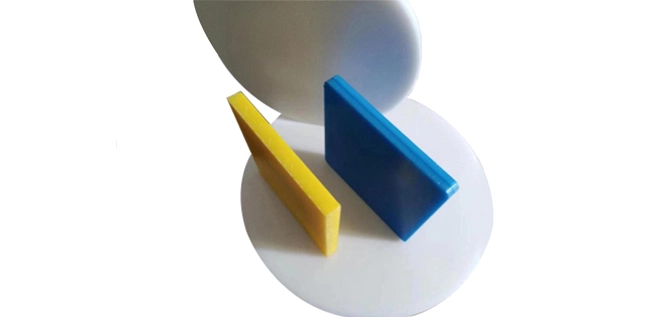
Two commonly used plastics in the sign industry are PP Sheet (Polypropylene Sheet) and PVC Sheet (Polyvinyl Chloride Sheet). Both offer distinct properties and advantages, making them suitable for different signage requirements. Understanding the differences between PP Sheet and PVC Sheet is essential for making an informed decision.
At their core, these materials are chemically distinct polymers:
1. PP Sheet:
Composition: Made from Polypropylene.
Key Characteristics: Known for its excellent chemical resistance, toughness, and flexibility.
Properties: Generally more flexible than PVC, has a lower melting point (around 160-170°C / 320-338°F), and is relatively lightweight.
Benefits: High fatigue resistance (can be bent repeatedly without cracking), good impact strength at lower temperatures, and often more environmentally friendly production and disposal (recyclable, doesn't contain halogens like chlorine).
2. PVC Sheet:
Composition: Made from Polyvinyl Chloride. Rigid PVC sheets typically do not contain the plasticizers found in flexible PVC (like vinyl).
Key Characteristics: Known for its rigidity, dimensional stability, and good flame-retardant properties (achieved through inherent properties).
Properties: Generally stiffer and more rigid than PP. It offers good resistance to weathering, chemicals, and impact (especially rigid formulations). It has a higher melting point (around 60-80°C / 140-176°F softening point for rigid PVC, higher for melting).
Benefits: Excellent weatherability (resists UV degradation well, *especially* when UV protected), good chemical resistance, inherently flame retardant to various standards, and strong dimensional stability under load.
Let's break down how PP Sheet and PVC Sheet perform in key areas relevant to signage:
PP Sheet: Offers more flexibility and can endure repeated bending, making it suitable for applications requiring a certain degree of contouring without cracking. Think "synthetic paper" feel or thin, bendable signs.
PVC Sheet: Provides superior rigidity and stiffness. This makes it ideal for applications that require structural integrity, such as mounted signs needing no visible support from behind, thicker plaques, or components where warping is unacceptable. Rigid PVC holds its shape exceptionally well.
Signage Implication: Choose PVC for flat, rigid signs mounted on walls, stanchions, or frames where stability is paramount. Choose PP for thinner banners, temporary signs (like floor graphics), back-lit applications where even lighting is needed, or situations requiring conformability.
PP Sheet: Standard PP sheets can be susceptible to UV degradation over time, leading to brittleness and eventual failure if not adequately protected. However, UV-stabilized grades of PP Sheet are available and offer significantly improved outdoor life.
PVC Sheet: PVC is renowned for its inherent weatherability and UV resistance. While pigmented PVC offers good protection, UV-protected grades are standard for long-term outdoor signage and provide superior color retention and material integrity for many years.
Signage Implication: For critical long-term (5+ years) outdoor signage demanding excellent weather and UV resistance, UV-protected PVC Sheet is generally the top choice. UV-stabilized PP Sheet can be suitable for shorter-term outdoor projects or less intense sun exposure. For indoor signs, UV resistance is less critical.
PP Sheet: Has a lower continuous-use temperature compared to PVC. While it can withstand typical ambient temperatures, be cautious of high-heat environments (e.g., signs on hot equipment, near intense lights). It softens and distorts at a lower temperature.
PVC Sheet: Rigid PVC has a higher heat deflection temperature, meaning it maintains its shape and rigidity better under sustained low-to-moderate heat stress. It's less prone to warping in warm environments than unmodified PP.
Signage Implication: If your sign is exposed to higher-than-ambient temperatures (e.g., near machinery, in warm retail windows), PVC is likely the safer bet. For standard indoor or shaded outdoor temperatures, both perform adequately.
PP Sheet: Excellently resistant to a wide range of chemicals, including acids, alkalis, solvents, and cleaning agents.
PVC Sheet: Also offers very good chemical resistance against modern cleaning solutions, alcohols, many acids, and alkalis. However, it can be susceptible to stronger solvents like ketones or aromatic hydrocarbons (though formulations can add resistance).
Signage Implication: Either material will typically withstand common cleaning chemicals well. PP might have a slight edge in broader chemical resistance, but PVC is completely suitable for general signage cleaning.
PP Sheet: Can exhibit higher coefficients of thermal expansion and moisture absorption than PVC. This means it might expand/contract slightly more with temperature fluctuations or humidity changes, which could affect dimensional accuracy in critical, tight-tolerance applications.
PVC Sheet: Offers excellent dimensional stability due to low moisture absorption and moderate thermal expansion characteristics.
Signage Implication: For applications requiring precise dimensions and minimal movement (e.g., machine-cut letters needing perfect fit, laminated panels), PVC Sheet is often preferred. PP Sheet is suitable for less dimensionally critical signs.
PP Sheet: Generally easy to cut, thermoform, and weld. Often used for vacuum forming applications.
PVC Sheet: Also easy to machine, cut (routers, lasers), drill, and weld using compatible methods.
Signage Implication: Both materials are workable for standard sign fabrication processes like CNC routing, laser cutting, and bending/forming with appropriate equipment.
PP Sheet: Often positioned as a slightly more economical option compared to rigid PVC Sheet.
PVC Sheet: Generally comes at a moderate price point.
Signage Implication: Cost sensitivity is always a factor. PP Sheet might be attractive for budget-conscious projects where its specific properties align with needs. However, choosing based *solely* on initial cost without considering performance suitability can lead to premature failure and higher long-term costs.
PP Sheet: Often viewed as having a slightly lower environmental impact due to its recyclability and the absence of chlorine (a halogen). However, like all plastics, responsible disposal and recycling are key.
PVC Sheet: Its lifecycle can be more complex ecologically, partly related to chlorine content and difficulties in recycling mixed PVC streams. Ongoing advancements in PVC recycling, however, are improving this.
Signage Implication: For projects where environmental footprint is a high priority, PP Sheet might be favored. However, longevity (a key aspect of sustainability) often favors durable materials like UV-protected PVC for long-lasting signs.


 English
  日本語
日本語  한국어
한국어  français
  Español
  русский
  português
  العربية
  Polska
  Svenska