Aug 22 , 2025
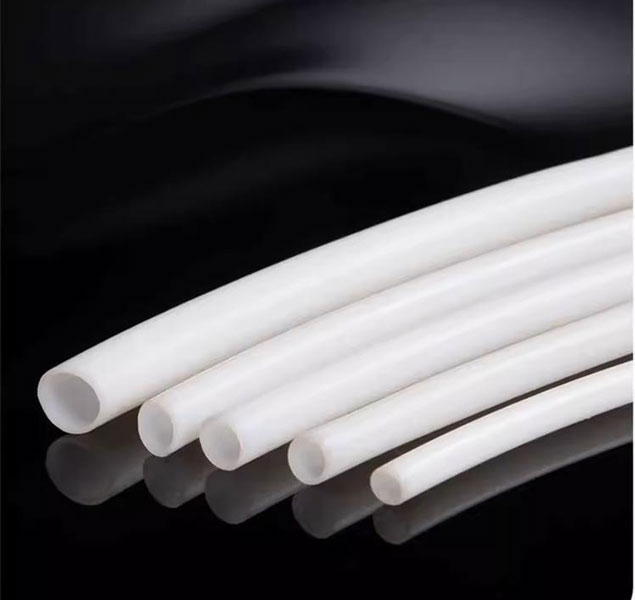
PTFE, or Polytetrafluoroethylene, is a remarkable synthetic fluoropolymer renowned for its unique properties. Key characteristics include:
* Extremely Low Friction: PTFE has one of the lowest coefficients of friction of any solid material. This is crucial for minimizing resistance as the filament slides through the tube.
* High-Temperature Resistance: PTFE can withstand continuous operating temperatures up to around 260℃ (500°F), making it suitable for the warm environment near the hot end.
* Chemical Inertness: It's highly resistant to almost all chemicals, ensuring it doesn't degrade when exposed to common 3D printing filaments.
* Non-Stick Properties: Filament is less likely to bind or stick inside a PTFE tube, promoting smooth extrusion and retraction.
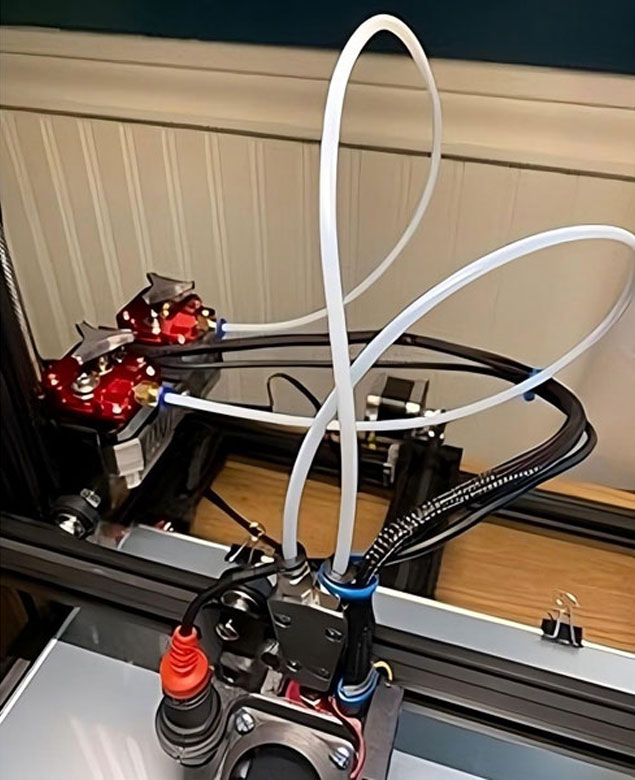
In a 3D printer, the PTFE tube acts as a precision guide path for the filament. Its primary functions are:
1. Low-Friction Filament Path: Its slippery interior ensures filament moves with minimal resistance from the extruder gears (or feeder) to the hot end. This is especially critical in Bowden setups, where the extruder motor is mounted away from the hot end, requiring the filament to travel a longer distance through the tube.
2. Containment and Guidance: It keeps the flexible filament contained and moving in a straight, predictable line, preventing buckling or kinking, which would cause extrusion failures.
3. Thermal Barrier (Partial): While not a perfect insulator, PTFE helps create a boundary between the cooler upper parts of the extruder path and the intense heat of the hot end. Quality tubes are crucial to withstand the heat near the nozzle without deforming or degrading, which can lead to clogs ("hot end gap") or even toxic fumes.
Not all PTFE tubes are created equal. For reliable 3D printing, consider:
* Precision Inner Diameter (ID): Consistency is key. A tight, consistent ID (commonly 1.9mm or 2.0mm for 1.75mm filament, or 3.0mm for 2.85mm) ensures optimal filament control and minimizes play that can cause blobbing or stringing.
* High Purity & Smoothness: High-quality, virgin PTFE ensures consistent low friction and avoids contaminants that could affect print quality or tube longevity.
* Temperature Rating: Ensure it can handle the temperatures your hot end operates at. Capricorn tubing is a popular high-temp variant known for its tighter tolerances and blue color.
* Dimensional Stability: The tube should resist compression or deformation under pressure from fittings and filament movement.
When performance and reliability are paramount, sourcing your PTFE tube from established, professional manufacturers is essential. China has become a global hub for high-quality polymer production, housing advanced PTFE tube factories with stringent quality control. Partnering with experienced manufacturers like Xinrui ensures you receive:
* Consistent, High-Purity Materials: Using premium-grade PTFE resin.
* Precision Manufacturing: Tubes produced to exacting tolerances for optimal performance.
* Rigorous Quality Testing: Ensuring every batch meets performance standards for friction, temperature resistance, and dimensional accuracy.
* Expertise in PTFE Processing: Deep understanding of the material's properties and behavior.


 English
  日本語
日本語  한국어
한국어  français
  Español
  русский
  português
  العربية
  Polska
  Svenska