Jul 31 , 2026
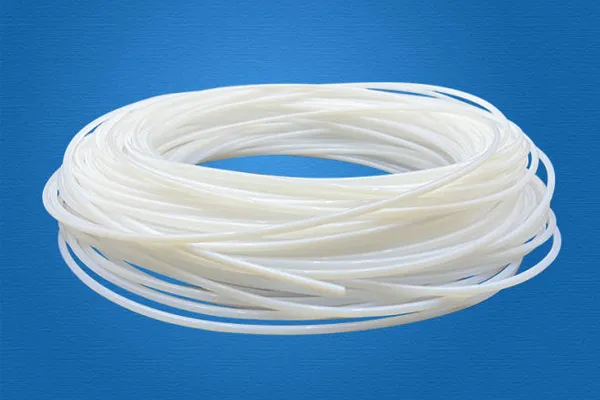
Polytetrafluoroethylene (PTFE) tubes serve critical functions due to the inherent characteristics of the base polymer. This article explores the fundamental material properties of PTFE, the reasons these make it suitable for tubing applications.
PTFE derives its remarkable capabilities from its molecular structure. It consists of a carbon backbone surrounded by fluorine atoms. This structure imparts several key properties:
1. Exceptional Chemical Resistance: PTFE demonstrates outstanding resistance to a vast range of chemicals. This inertness arises from the strong carbon-fluorine bonds and the shielding effect of the fluorine atoms around the carbon chain. PTFE tubing is highly resistant to both acids and bases, including powerful substances like hydrochloric acid, sulfuric acid, nitric acid, and sodium hydroxide. It also withstands exposure to many aggressive organic solvents and oxidizers. This makes PTFE tubes invaluable in chemical processing laboratories and plants where corrosive fluids are handled.
2. Wide Temperature Range: PTFE exhibits excellent thermal stability. It maintains useful mechanical properties over a broad temperature range, typically from approximately -200°C to +260°C (-328°F to +500°F). At low temperatures, it remains pliable and impact resistant. At elevated temperatures, it retains strength without becoming brittle; the key limitation at high temperatures is dimensional stability and potential property degradation above around 260°C. This characteristic allows PTFE tubing to function reliably in environments experiencing thermal extremes, such as cryogenics or certain industrial processes.
3. Low Coefficient of Friction: The surface of PTFE is exceptionally slippery, possessing one of the lowest coefficients of friction of any known solid material. This inherent non-stick quality minimizes surface adhesion and resistance to flow for fluids passing through PTFE tubing. It also reduces wear and the tendency for particles or viscous fluids to build up on the tube's interior walls, particularly important in food handling or pharmaceutical applications.
4. Excellent Electrical Insulation Properties: PTFE is an outstanding electrical insulator. It exhibits very high volume resistivity, dielectric strength, and a low dielectric constant (typically around 2.1). Its electrical properties remain consistent across its wide operating temperature range and do not degrade significantly under most environmental conditions. This makes PTFE tubing a standard choice for insulating sleeves for wires and cables in sensitive electronics and demanding aerospace applications.
5. UV Resistance and Low Weathering: PTFE maintains long-term stability when exposed to direct sunlight (UV radiation) and other weathering conditions. This resistance to environmental degradation contributes to its durability for outdoor applications compared to many other polymers.
6. Low Permeability: While not completely impermeable to all gases and liquids, PTFE offers very low permeability to moisture and a variety of common gases. This reduces permeation losses and is beneficial in applications like gas sampling lines or where the purity of transported fluids is critical.
7. Biocompatibility: For medical-grade formulations, PTFE is considered biocompatible and can meet relevant standards such as USP Class VI. This enables its use in specific medical device applications, including as catheters and implantable components (though specific biocompatibility tests and regulatory approvals are always required for intended use).
PTFE tubes are commonly manufactured through extrusion processes. Due to PTFE's high melt viscosity, it cannot be processed using conventional thermoplastic extrusion (melting and drawing through a die). Instead, granular PTFE powder is blended with an extrusion aid (lubricant). This mixture is forced under high pressure through a die to form the tube shape ('paste extrusion'). The extruded 'green tube' is then subjected to high temperatures to volatilize the lubricant in a drying step and then sintered at temperatures above its crystalline melting point to fuse the PTFE particles, forming a continuous, solid, dense tube. Careful control of the extrusion and sintering processes is essential to achieve the desired dimensional tolerances, density (which influences properties like pressure rating and permeability), and uniform properties throughout the tube. Variations include extruding as unsintered tape (PTFE tape) which may later be wound and sintered to form tubes.
The unique combination of properties listed above makes PTFE tubes indispensable in numerous sectors:
1. Chemical Processing: This remains a primary application. PTFE tubes transport corrosive chemicals, aggressive solvents, and reagents safely in laboratories (pipelines, analysis lines, probe liners), pilot plants, and large-scale industrial facilities. Their resistance ensures fluid purity is maintained and prevents contamination or degradation of the tubing itself.
2. Fluid Transfer and Instrumentation: Low friction and chemical resistance make PTFE tubing ideal for:
● High-Purity Systems: In semiconductor fabrication, pharmaceutical production, and food/beverage processing where contamination must be avoided. While slightly permeable compared to PFA for super high purity, it's still widely used.
● Chromic Acid and Aggressive Chemicals: Essential lines in plating and anodizing baths.
● Abrasive Slurries and Viscous Fluids: The non-stick surface helps prevent buildup and allows easier cleaning.
● Gas Sampling and Analysis: Used in environmental monitoring and industrial gas analysis instruments due to its inertness and low permeability.
● Hydraulic Hose Lines (Lined): High-pressure hydraulic hoses often incorporate a PTFE liner to protect against corrosion from the fluid and reduce friction within the inner walls.
3. Electrical/Electronic Applications: PTFE tubing serves as an insulating sleeving for wires and cables, especially in aerospace, defense electronics, telecommunications, and high-frequency applications where minimal signal loss and stable dielectric properties are critical at ambient and elevated temperatures. Its thin-wall capabilities and flexibility are advantageous.
4. Medical Applications: Medical-grade PTFE tubing is utilized in various devices, including catheters (especially for coronary applications), endoscopic instrument channels, and introducer sheaths. Its biocompatibility, lubricity, chemical resistance, and ability to be sterilized are key factors. Extreme care and adherence to strict regulatory requirements govern its use in implantable devices.
5. Automotive and Aerospace: Used in fuel and brake line systems (often as sleeving or as liners in braided hoses), sensor protection, and insulation for wiring harnesses due to its temperature stability and chemical resistance against fluids like brake fluid or hydraulic oils. Also used in hydraulic systems as previously mentioned.
6. General Industrial: Non-stick surface properties benefit applications needing characteristics such as release or minimal friction (anti-stick guides, chutes). It can be found in various forms, including standalone flexible tubes, integral linings for metal pipes, rigid pipe hangers, and protection sleeves.



 English
  日本語
日本語  한국어
한국어  français
  Español
  русский
  português
  العربية
  Polska
  Svenska