Dec 08 , 2025
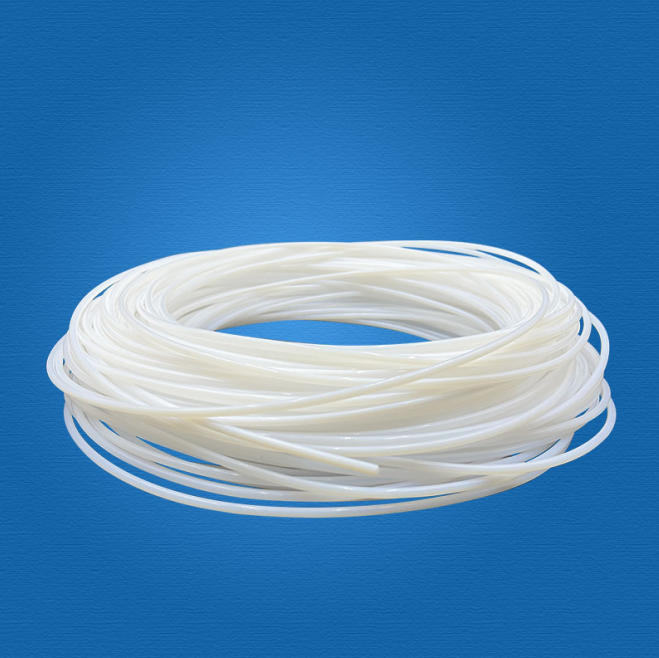
For OEMs, integrating high-performance components is crucial. PTFE tubing excels in handling aggressive chemicals, high temperatures, and purity requirements. Yet, standard solutions often fail to meet complex design needs, making custom PTFE pipe configurations a key strategic advantage.
PTFE’s outstanding chemical resistance, extreme temperature tolerance (–200°C to +260°C), low friction, and non-stick properties make it essential in semiconductors, chemical processing, pharmaceuticals, and analytical instruments. However, joining standard PTFE tubing with standard fittings often creates inefficiencies, leaks, flow disruption, or a poor fit in tight equipment spaces.
Customization addresses these challenges head-on. By working with a specialized ptfe tube manufacturer, OEMs can specify PTFE pipe configurations that are:
1. Dimensionally Precise: Exact inner diameters (ID) and outer diameters (OD) ensure optimal flow rates, pressure ratings, and compatibility with mating components. Lengths can be cut to specific requirements, minimizing waste and assembly time.
2. Geometrically Complex: PTFE tubing isn't limited to straight runs. Advanced fabrication techniques like heat forming allow for the creation of complex bends, coils, loops, and specific shapes. This enables the tubing to navigate intricate equipment layouts, avoid obstacles, and fit perfectly within the designated envelope, eliminating stress points from forced routing.
3. Functionally Optimized: Customization extends beyond shape. Options include:
* Flared Ends: For secure, leak-tight connections in push-fit systems.
* Skived Ends: Creating thin, flexible sections ideal for flanging or specific sealing methods.
* Pre-installed Fittings: Permanent bonding of specific end fittings (NPT, compression, flanges, sanitary tri-clamp, etc.) onto the PTFE tube during manufacturing ensures integrity and simplifies final assembly.
* Multi-Lumen Designs: For applications requiring multiple fluid paths within a single conduit.
* Reinforced Constructions: Incorporating braiding (e.g., stainless steel) for enhanced pressure resistance or kink protection where needed.
* Material Variations: Utilizing modified PTFE (like FEP for improved flexibility or PFA for higher clarity) where specific properties are beneficial.
The benefits for OEMs are significant:
* Reduced Assembly Time & Cost: Pre-configured, ready-to-install tubing assemblies streamline production lines.
* Enhanced Reliability: Eliminating field assembly errors (like improper flaring or fitting attachment) improves system integrity and reduces failure rates.
* Optimized Performance: Precise dimensions and routing ensure consistent flow, pressure, and thermal characteristics.
* Space Efficiency: Custom bends and shapes maximize the use of available space within the equipment.
* Improved Safety: Secure, factory-applied fittings and leak-tight configurations enhance operator safety, especially when handling hazardous substances.
* Competitive Advantage: Delivering equipment with integrated, high-performance fluid handling systems becomes a key differentiator.
For example, a semiconductor tool might require tightly coiled PTFE tubing with specific bend radii to fit within a wafer handling module, featuring flared ends for quick connects to chemical delivery valves. A medical analyzer could need short, precisely angled lengths of small-diameter PTFE tube with pre-attached Luer fittings for connecting reagent cartridges. A chemical processing skid might utilize large-diameter PTFE pipe with custom flanges welded on for direct integration into reactor feed lines.
Partnering with a manufacturer experienced in PTFE fabrication and customization, like Xinrui Plastic, allows OEMs to overcome integration challenges, enhance product quality, and ultimately achieve greater success in their respective markets.


 English
  日本語
日本語  한국어
한국어  français
  Español
  русский
  português
  العربية
  Polska
  Svenska