Dec 02 , 2025
When designing gears for applications demanding high torque transfer or operating in environments with inherent friction, selecting the right plastic rod material is crucial. Two common contenders are Polypropylene (PP) Rod and various Nylons (like Nylon 6, Nylon 66). While both offer advantages, their suitability for high-friction gears differs significantly. Let's break down the key factors.
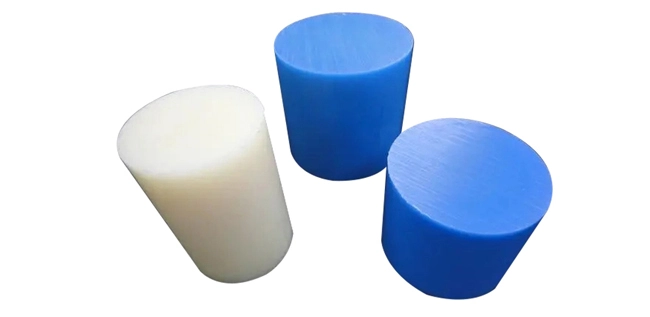
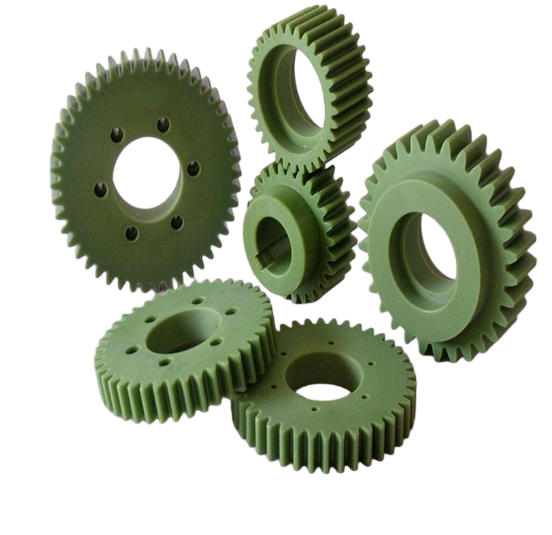
* Nylon: Generally superior. Nylon, particularly Nylon 66, exhibits excellent inherent wear resistance and a low coefficient of friction, especially when lubricated (even with water or oils present in the environment). As a high-performance material widely applied in power transmission components, premium nylon rods for sale on the market are processed from such high-quality nylon raw materials, and the gears made from them can withstand the rubbing and sliding inherent in gear meshing better than standard PP. This translates to longer gear life under high-friction conditions.
* PP: Standard polypropylene has a higher coefficient of friction and lower wear resistance compared to nylon. Under continuous high-friction loads, PP gears are more prone to rapid wear, deformation, and eventual failure. While lubricants help, PP doesn't inherently perform as well as nylon in this arena.
* Nylon: Offers higher tensile strength, stiffness (modulus of elasticity), and impact resistance than standard PP. This allows nylon gears to handle higher loads and transmit more torque without excessive deflection or breakage, which is vital in demanding applications.
* PP: While reasonably tough, PP is less rigid and has lower yield strength than nylon. Under high loads encountered in high-friction scenarios, PP gears are more likely to deform (bend or twist), leading to misalignment, increased noise, accelerated wear, and potential tooth failure.
* Nylon: Generates less frictional heat than PP due to its lower coefficient of friction. More importantly, nylon has a higher heat deflection temperature. It can better withstand the heat generated in high-friction gear applications without softening or losing its shape, which is a key advantage over materials used for pp rod.
* PP: Has a lower heat deflection temperature. The significant heat generated by high friction can cause PP gears to soften, deform, and fail prematurely. This is a major limitation for PP in high-friction gear applications.
* Nylon: Absorbs moisture, which can cause slight dimensional swelling and potentially reduce stiffness slightly. While often manageable with proper design (using stabilized nylon or allowing for swelling), it's a factor to consider.
* PP: Highly resistant to moisture absorption. Its properties remain stable in wet environments, which can be an advantage if dimensional stability in humidity is critical, though its friction and wear performance are still the primary limitations.
* PP: Generally less expensive than nylon and often easier to machine, offering cost savings for simpler applications.
* Nylon: Typically more expensive than PP. While still machinable, it can be slightly tougher on tools.


 English
  日本語
日本語  한국어
한국어  français
  Español
  русский
  português
  العربية
  Polska
  Svenska