Jul 27 , 2026
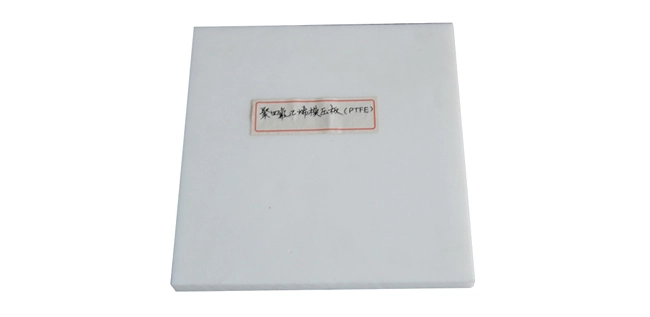
PTFE sliding plates are critical components in demanding engineering applications, from seismic isolation systems and bridge bearings to heavy machinery slides and architectural expansion joints. They enable smooth movement, control friction, transfer loads, and ensure long-term structural integrity. Choosing a reliable PTFE plate manufacturer directly impacts project safety, durability and performance. Given these stakes, identifying a trustworthy supplier requires systematic assessment based on technical expertise and strict quality commitment.
The foundation of a quality PTFE slide plate starts with the material itself. A reliable manufacturer demonstrates in-depth understanding of PTFE's properties, including its coefficient of friction (CoF), wear characteristics (specific wear rate), creep resistance, compressive strength, and chemical inertness. They must articulate how these properties are influenced by factors:
Raw Material Quality: Expertise in sourcing high-molecular-weight, virgin PTFE granules or resins from reputable polymer producers. Look for manufacturers who can provide traceability for their raw materials.
Filler Selection and Dispersion: Understanding the role of fillers (like glass fibers, bronze, carbon/graphite) in reinforcing PTFE, improving wear resistance, and enhancing thermal conductivity. Crucially, the manufacturer must possess sophisticated processes to ensure the *homogeneous dispersion* of fillers within the PTFE matrix. Inconsistent dispersion leads to weak spots, accelerated wear, and uneven friction properties.
Processing Mastery: In-depth knowledge of sintering profiles and pressures used in molding (compression or isostatic) or machining fabricated stock shapes. Deviations in sintering temperature or time can significantly affect the crystallinity, void content, and mechanical properties. A reliable supplier controls these parameters meticulously.
Assessors must move beyond sales literature and inspect the manufacturer's *actual* QC processes. Reliable suppliers integrate comprehensive checks throughout production:
Incoming QC: Verification of raw PTFE resin and filler material certificates (CoA) against specifications.
In-Process QC: Monitoring of molding/sintering parameters (temperature, pressure, time), dimensional checks during machining, visual inspection for defects (cracks, voids, inclusions).
Final Product Testing: Comprehensive testing of finished plates. Non-negotiable tests include:
Dimensions & Surface Finish: Precise adherence to tolerances and specified surface roughness (Ra) is essential for fit and function (e.g., Ra ≤ 0.8 - 1.6 µm for optimal friction performance against stainless steel).
Apparent Density: Measured using ASTM D792 or similar, ensuring the plate is neither too "fragile" (low density, high void content) nor overly "soft" (indicating issues).
PTFE Content Verification: (Especially important for filled grades) confirming correct filler percentage.
Internal Quality: Potential use of non-destructive testing (NDT) techniques where appropriate.
Laboratory performance under controlled conditions offers vital insight. Reputable manufacturers invest in testing their PTFE grades:
Coefficient of Friction (CoF): Testing against 304/316 stainless steel under loads and sliding velocities relevant to target applications, per ASTM F732 or similar protocols. Results should differentiate between static and kinetic friction.
Wear Rate: Subjecting specimens to sustained friction cycles, measuring material loss (often calculated as specific wear rate - mm³/Nm), arguably the most critical indicator for long-term performance.
A reliable supplier acts as a partner, not just a vendor. They should demonstrate:
Understanding of Loads and Movements: Proficiency in calculating contact pressures (Pavg = Load / Area), sliding velocities, and the interplay of friction and cold flow (creep). They should offer guidance on pad sizing based on intended stress levels and desired lifespan.
Design Optimization: The ability to recommend solutions for mounting (bonding substrates like stainless steel, grooves, dimples), edge treatment to prevent cold flow, lubrication options (if applicable), and potential machining or fabrication requirements for complex designs. Beware of manufacturers who tout simplistic "one-size-fits-all" approaches or unrealistic design "fixes" like exaggeratedly large concrete mounting pads to mask poor cold flow performance.
Material Selection Guidance: Advising on the optimal PTFE compound (unfilled for low loads, filled for wear resistance/high loads, bronze for high thermal transfer) and advising on mating surface requirements (surface roughness, hardness of stainless steel counter-face).
Technical capabilities are nullified if the supplier cannot deliver consistently and reliably. Evaluate:
Asset Ownership and Location: Does the manufacturer own the production facilities? Reliable players often have in-house machining capabilities integrated with molding. Question reliance on extensive outsourcing.
Inventory Management: Capacity to manage raw material stock and finished goods buffers, ensuring reasonable lead times.
Logistics Capability: Experience in packaging, handling, and shipping dimensional and sensitive components safely to sites worldwide. Proof of quality in transit (proper immobilization against shock/vibration, and moisture protection) matters.
Look for tangible proof of a quality-first culture:
Formal Quality Certifications: ISO 9001 (Quality Management System) is an absolute baseline expectation. Additional industry-specific certifications (e.g., related to construction products or seismic devices) add significant credibility.
Environmental Credentials: ISO 14001 may indicate responsible chemical handling and waste management, important for ethical sourcing.
Product-Specific Support: Evidence of ongoing R&D investment, clear documentation and technical support (installation guides), warranties tied to specific performance parameters (based on defined end-use conditions and proper installation – generic lifetime claims are meaningless).



 English
  日本語
日本語  한국어
한국어  français
  Español
  русский
  português
  العربية
  Polska
  Svenska