Mar 27 , 2026
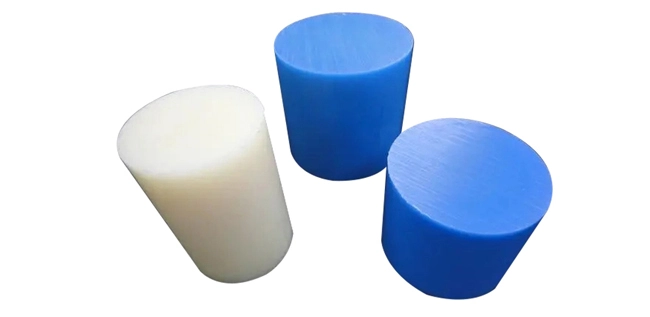
The automotive industry demands components that are reliable, lightweight, cost-effective, and capable of withstanding harsh operating environments. Polypropylene (PP), a versatile and widely used thermoplastic, offers significant advantages for specific automotive applications due to its excellent chemical resistance, low moisture absorption, good electrical insulation, and inherent toughness. Successfully producing high-quality, custom PP components for automotive systems requires an understanding of the material's properties and the implementation of specific machining techniques.
Here are 5 crucial machining tips to ensure optimal results when working with PP rod or bar for custom automotive parts:
1. Understand PP's Thermal Sensitivity and Optimize Cutting Parameters:
The Challenge: PP has a relatively low melting point (around 160°C - 170°C). Excessive heat generated during machining can cause the material to soften, melt, and smear instead of cleanly shearing. This leads to poor surface finish, gumming up of tools, dimensional inaccuracies (due to material flow), and potentially weakened parts.
The Tip: Prioritize sharp tools and high cutting speeds with low feed rates.
Sharp Tools: Use new or freshly sharpened tools. Carbide tools are generally preferred for their sharpness and edge retention. High-speed steel (HSS) can be used but requires more frequent sharpening. Dull tools generate significantly more friction and heat.
High Cutting Speeds: Running tools at higher speeds (RPM) reduces the contact time between the tool and the material per revolution, helping to dissipate heat more effectively before it builds up excessively. However, monitor closely to avoid vibration.
Low Feed Rates: Reducing the feed rate minimizes the amount of material being removed per tool pass, lowering the cutting forces and the heat generated per unit time. This helps prevent melting and allows the material to shear cleanly.
Light Cuts: Take lighter depth of cuts (DOC) rather than heavy passes, especially when roughing. This further reduces heat buildup and cutting forces.
Optimization: Start with manufacturer recommendations for plastics machining and fine-tune based on the specific PP grade, tool geometry, and machine rigidity. The goal is a balance that removes material efficiently without generating detrimental heat.
2. Employ Effective Cooling (or Lack Thereof) and Chip Management:
The Challenge: While coolant is standard in metal machining, its use with PP is often counterproductive. Water-based coolants can cause PP to swell slightly due to moisture absorption, potentially affecting dimensional stability. More importantly, coolant can actually *promote* gumming by trapping hot chips against the workpiece and tool, creating a pasty mess that leads to poor finishes and tool clogging. PP chips are typically long, stringy, and difficult to break.
The Tip: Dry Machining with Compressed Air is usually the best approach.
Compressed Air: Use a strong, directed stream of compressed air at the cutting point. This serves multiple purposes:
Cooling: Provides effective convective cooling without causing swelling.
Chip Evacuation: Blows chips away from the cutting zone immediately, preventing them from recutting (which damages the finish and generates heat) or accumulating and causing gumming.
Debris Clearance: Keeps the work area clear.
Avoid Coolants: Generally, avoid traditional water-soluble or oil-based coolants. If *some* lubrication is deemed necessary for specific operations (e.g., threading), use minimal amounts of a compatible lubricant (like alcohol-based or specific plastic machining fluids) applied sparingly and directly, followed by thorough cleaning. Always test compatibility first.
Sharp Tools & Correct Geometry: Sharp tools (mentioned in Tip 1) naturally produce cleaner chips. Tool geometry (positive rake angles, polished flutes) can also help in chip formation and evacuation.
3. Master the Art of Workholding for Soft Materials:
The Challenge: PP is significantly softer than metal. Traditional clamping methods using standard vise jaws or excessive force can easily deform the material, leaving deep indentations or even crushing the rod/bar, especially on thin-walled sections or near the edges of a cut. Vibration can also be an issue.
The Tip: Use Gentle, Distributed Pressure and Soft Jaws.
Soft Jaws: Machine custom soft jaws from a material softer than PP (like aluminum or even high-density urethane) to match the contour of the PP rod/bar. This distributes the clamping force over a larger area, minimizing point pressure and preventing deformation. Ensure the soft jaws are clean and free of chips.
Minimal Clamping Force: Apply only the force necessary to securely hold the workpiece without slipping. Over-tightening is a common cause of damage.
Support: Provide adequate support beneath the workpiece, especially for longer bars or when machining near the ends, to prevent bending or vibration under cutting forces.
Step Clamping: For operations requiring higher cutting forces, consider clamping the material in stages: lightly at first, then perform an initial light machining pass to relieve some internal stress or create a more stable profile, then re-clamp (still gently) before the final passes.
4. Address Dimensional Stability and Springback:
The Challenge: PP exhibits viscoelasticity – it deforms under stress and may partially recover (spring back) when the stress is removed. It also has a relatively high coefficient of thermal expansion. Combined with heat generation during machining, this can lead to parts being dimensionally inaccurate once cooled and unclamped. Internal stresses induced by machining can also cause slow warping over time.
The Tip: Account for Thermal Expansion and Allow for Stress Relief.
Thermal Compensation: Be aware that the part dimensions measured immediately after machining (while potentially still warm) may not be the final dimensions. Allow parts to cool to ambient temperature before final inspection. For critical tolerances, operators may need to compensate slightly in their offsets based on experience and measured trends, considering the expected thermal contraction.
Stress Relief: For precision components, especially those with tight tolerances or complex geometries, consider a stress-relieving step. This often involves annealing the machined parts by heating them to a temperature below the melting point (e.g., 70-100°C, depending on the grade) for a period and then allowing them to cool slowly and uniformly. This helps relax machining-induced stresses and improves long-term dimensional stability.
Sequencing: Plan machining sequences to minimize the introduction of asymmetric stresses. Avoid leaving large amounts of material to be removed from one side after the part is partially finished.
5. Implement Rigorous Quality Control Specific to Plastics:
The Challenge: Surface finish requirements, burr formation, and dimensional accuracy are critical, especially for parts interfacing with other components, sealing surfaces, or moving parts within an automotive system. Measuring soft materials without causing damage also requires care.
The Tip: Use Appropriate Measurement Techniques and Inspect for Plastic-Specific Defects.
Non-Contact or Soft Contact Gauging: Whenever possible, use optical comparators, laser scanners, or vision systems for measurement to avoid compressing or scratching the PP surface. If contact measurement is necessary (e.g., micrometers, calipers), apply minimal, consistent force and use anvils/flats designed for soft materials if available.
Surface Finish Inspection: PP can be machined to a good surface finish with proper techniques. Inspect for signs of melting, smearing, or poor surface texture, which indicate issues with tool sharpness, speed, or feed rate.
Burr Inspection: PP tends to form burrs, particularly on edges exiting a cut. Inspect carefully and use appropriate deburring techniques – sharp knives, scrapers, or even specialized plastic deburring tools. Avoid methods that generate excessive heat (like some power brushes or hot knives unless expertly controlled). Tumbling with appropriate media can be effective for small parts.
Dimensional Checks After Cooling: As emphasized in Tip 4, perform critical dimensional checks only after the part has fully equilibrated to room temperature.
Visual Inspection: Check for cracks, voids, or discoloration that might indicate overheating or material defects.


 English
  日本語
日本語  한국어
한국어  français
  Español
  русский
  português
  العربية
  Polska
  Svenska