Oct 30 , 2026
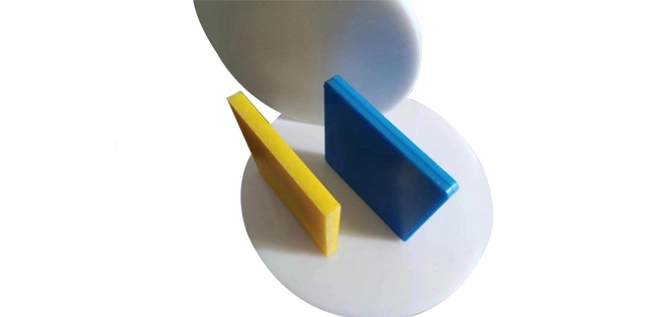
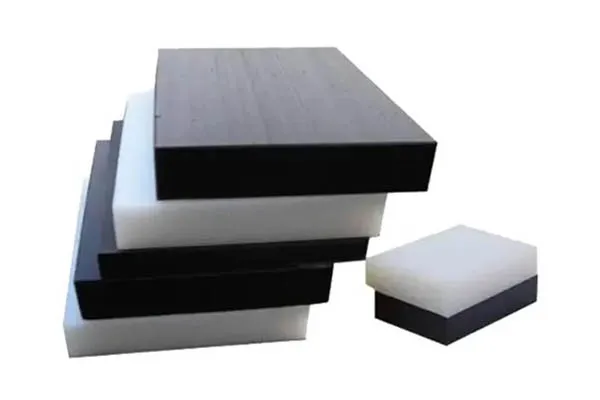
The selection of the right polymer rod or bar stock is crucial across numerous applications, ranging from industrial components to consumer goods. Key mechanical properties, especially tensile strength, often become decisive factors. This article delves into a data-driven comparison of Polypropylene (PP) Rods/Bars and Acetal Copolymer (POM-C) Rods/Bars, focusing specifically on their tensile strength characteristics and the implications for material selection.
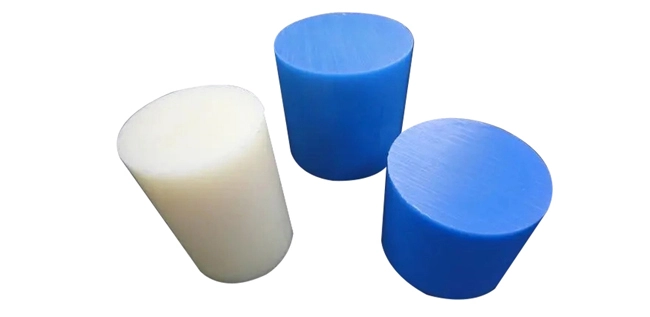
Polypropylene (PP) Rods/Bars: PP is a commodity thermoplastic widely available in rod or bar form. Its widespread use stems from an excellent balance of properties including:
Good Chemical Resistance: Highly resistant to various solvents, acids, and alkalis.
Low Density: Lightweight compared to many engineering plastics.
Good Fatigue Resistance:
Low Coefficient of Friction:
Excellent Dielectric Properties:
Easy Processability: PP offers good machinability from stock shapes. Common grades include homopolymer and copolymer (typically with ethylene) variations, each offering slightly different characteristics. PP exhibits moderate mechanical strength relative to engineering plastics like POM.
Acetal Copolymer (POM-C) Rods/Bars: Acetal, specifically the copolymer variant (POM-C), is a high-performance engineering thermoplastic. It is characterized by:
High Stiffness: Exceptional stiffness near room temperature.
Excellent Dimensional Stability: Low water absorption and creep resistance.
Good Fatigue Resistance:
Good Chemical Resistance: Resistant to solvents, hydrocarbons, and neutral chemicals.
Excellent Wear and Abrasion Resistance: Often used in moving parts. Acetal copolymer is known for its high tensile strength and stiffness, making it suitable for demanding mechanical applications.
Tensile strength refers to the maximum stress a material can withstand while being stretched or pulled before it breaks. It's a fundamental indicator of a material's load-bearing capacity under tension. When comparing unmodified grades:
Acetal Copolymer (POM-C): This material typically offers significantly higher tensile strength than standard PP grades. While values can vary slightly depending on the specific copolymer formulation and testing conditions (temperature, strain rate), tensile strength at yield for unfilled POM-C generally falls within the range of approximately 55 - 70 MPa (8000 - 10,000 psi). This high strength is attributed to its highly crystalline structure and strong molecular chain bonds. POM-C maintains useful mechanical properties up to around 90°C - 100°C. Its stiffness is also notably higher than PP.
Polypropylene (PP): Standard PP grades (homopolymer or copolymer) exhibit lower tensile strength compared to engineering plastics like POM-C. Tensile strength at yield for unfilled PP typically ranges from about 25 MPa to 35 MPa (3600 - 5000 psi), with homopolymers generally being slightly stronger than copolymers. PP's strength properties are more temperature-sensitive than POM-C, decreasing more rapidly as temperature rises beyond ambient. Its modulus is also considerably lower.
Key Takeaway: For applications where high tensile strength is the primary requirement, unfilled Acetal Copolymer offers a distinct advantage over standard PP by a considerable margin (often twice or more). POM-C also provides superior stiffness.
Several factors can shift the balance:
1. Reinforcement: Both materials can be reinforced. Adding glass fiber (GF) dramatically increases tensile strength and stiffness:
GF-Reinforced PP: Strength can surpass *some* unreinforced engineering plastics, potentially reaching 50 - 80+ MPa or higher, approaching the lower range of unreinforced POM-C but rarely exceeding it significantly on a strength basis. Stiffness (modulus) improvement is substantial.
GF-Reinforced POM-C: Starts from a much higher base strength. GF reinforcement pushes its tensile strength well above 100 MPa, significantly outperforming reinforced PP on strength.
2. Temperature: As temperatures increase:
PP: Its strength decreases more rapidly than POM-C. At higher temperatures (>80°C), PP retains a lower percentage of its room temperature strength compared to POM-C. This makes the disparity greater at elevated temperatures.
POM-C: Retains a higher percentage of its tensile strength at moderately elevated temperatures (up to ~100°C) than PP does, maintaining its strength advantage.
3. Long-Term Loading (Creep): Both polymers are susceptible to creep (deformation under sustained load). Unfilled PP exhibits higher creep under load than unfilled POM-C, meaning POM-C is better suited for applications requiring long-term dimensional stability under tension. Reinforced grades improve creep resistance.
While tensile strength is critical, it's rarely the sole deciding factor. Material selection must be holistic:
Acetal Copolymer (POM-C) Selection Areas: Ideal for demanding applications requiring high strength, stiffness, low friction, excellent dimensional stability, fatigue resistance, and durability. Examples include gears, bearings, bushings, fasteners, conveyor components, pump parts, medical devices, and various high-precision mechanical components where these properties are paramount. Key Drivers: High strength/stiffness needs, precision, wear resistance.
PP Selection Areas: PP excels when cost-effectiveness, chemical resistance, low weight, dielectric properties, or general non-critical mechanical performance are the priorities. Applications include chemical processing tanks/lining, lightweight containers, fluid handling components (pipe, valves), insulating parts, laboratory equipment, and a vast array of consumer and specialized industrial components where the demands on tensile strength are moderate. Key Drivers: Cost, chemical resistance, low weight.



 English
 日本語
 한국어
 français
 Español
 русский
 português
 العربية
 Polska
 Svenska